Strategic Mandate: Revalidating Core Deliverables
- History and Mission: ULD CARE originated as an IATA committee in 1971 and incorporated as a Canadian not-for-profit corporation in 2011. The conference reaffirmed that the acronym CARE stands for Compliance, Airworthiness, Regulation, and Education.
- Revalidation of the Four Pillars: The community reaffirmed its four core foundational deliverables:
- Eliminate waste and improve operational efficiency.
- Manage risk in ULD operations and flight safety.
- Adopt new technologies and practical digital workflows.
- Advance global standardisation across regulatory and operational practices.
- The Implementation Gap: Stakeholders acknowledged that while these deliverables remain valid, execution over the past two decades has lagged. ULDs remain a low corporate priority despite causing $300 million in annual repair and damage costs and ranking as the number one cause of aircraft ground damage. The body resolved that continuing with unexecuted high-level goals is no longer viable, framing the moment as a turning point between professionalised management and closure.
Scope Expansion: The “Push, Pull, or Touch” Ecosystem
- Declining Airline Engagement: Airline participation has diminished as carriers increasingly outsource fleet management to pooling and leasing providers such as Unilode and Jettainer.
- Expanding Membership: ULD CARE MUST broaden its scope beyond traditional airlines to encompass every stakeholder that “pushes, pulls, or touches” ULDs. This includes:
- Ground Handling Agents (GHAs) and cargo terminals.
- Freight forwarders and 3PLs.
- Maintenance, Repair, and Overhaul (MRO) facilities.
- Original Equipment Manufacturers (OEMs) and leasing companies.
- Road Feeder Services (RFS) and intermodal trucking partners.
- Dedicated Working Groups: The organisation agreed to establish dedicated operational streams, including an MRO working group to share repair efficiencies, skills, and recycling practices, as well as sub-client groups for pooled carriers.
Frontline Accountability & “Back-to-Basics” Operations
- Root Causes in Human Factors: Industry studies confirm that human error, high turnover, and inadequate frontline training drive the majority of ULD and aircraft damage.
- Competency Over “Tick-Box” Learning: The organisation agreed to look at moving away from superficial online learning management system (LMS) modules in favour of practical, on-site competency checkouts. It is formalising critical role expectations across lead agents, supervisors, and duty managers.
- Public Repair “Hot Spot” Dashboards: Recognizing that damage peaks concentrate at specific airports due to “pass-the-problem” habits across handoffs, ULD CARE will look to publish anonymised repair dashboards to highlight damage trends and locations.
- Accountability Frameworks: The body agreed to examine how to implement operational health checks, explore yellow/red card accountability systems, and reinstate forwarder audit standards modeled after historical industry programs.
Financial Sustainability: Moving Away from “Free of Charge”
- The Financial Challenge: Operating historically as a low-cost, free-of-charge entity has restricted ULD CARE’s capacity to fund programmes, deploy digital tools, and support full-time staff or ambassadors.
- Value-Based Revenue Transition: The organisation board is to review a transition to paid, high-value offerings under a commercial model:
- Tiered Memberships & Subscriptions: Extending structured membership fees across non-airline handlers, forwarders, and logistics providers.
- Operational Health Checks & Audits: Chargeable diagnostic reviews of station operations and forwarder compliance.
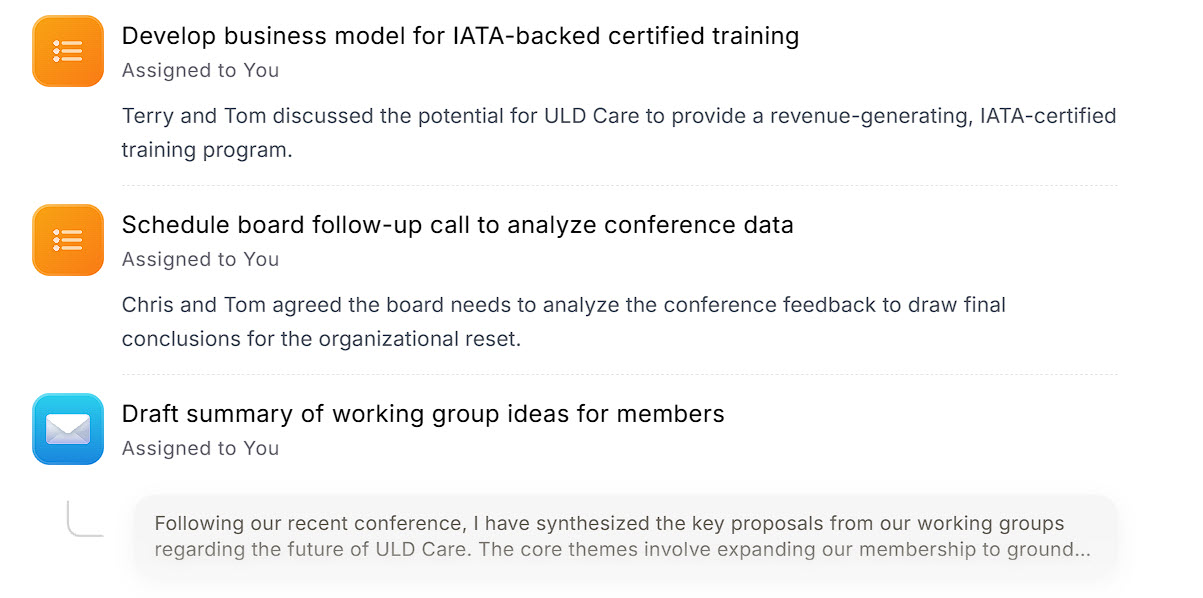
- Training Certifications: Commercialised, certified training programmes for ground handlers that airlines can mandate within service level agreements (SLAs).
- OEM Certification Fees: Monetised sustainability and climate labelling schemes providing documented ESG reporting value.
Regulatory & Industry Positioning
- A Bridge, Not a Regulator: Rather than duplicating standards set by IATA or safety regulators (FAA, EASA), ULD CARE will act as the practical conduit. Regulators provide oversight and IATA sets regulations; ULD CARE drives ground-level adoption and channels operational evidence back to influence those standards.
- Neutral Data Clearinghouse: Addressing commercial sensitivities that hinder performance benchmarking, ULD CARE will act as a neutral third party to collect, anonymise, and distribute macro operational data (incident rates, repair trends, spare part usage).
- Executive Framing: The organisation will reframe communications toward corporate safety VPs and sustainability leads, establishing ULD airworthiness as a core safety discipline rather than an isolated ground handling cost.
Nuance & Friction
- Data Ownership: There is historical resistance to data sharing, particularly from pooling companies who view their proprietary data as a competitive “lifeline.” For the clearinghouse to work, the “neutrality” of ULD Care must be absolute.
- Organizational Silos: Airline representatives noted that ULD management and training budgets are often handled by different departments (Cargo vs. Ground Ops), which may complicate the adoption of a paid ULD Care training model.
- Execution Gap: The board recognized that despite years of effort on RFID and sustainability, the organization has struggled to move the needle on industry-wide adoption. The new model must prioritize “deliverables that provide financial stability.”
Next Steps
- Synthesis & Review: The board will use AI-assisted analysis of the working group recordings to draft a formal recommendation paper.
- Follow-up Session: A conference call will be scheduled to discuss the path forward; no further in-person meetings are planned for this specific reset phase.
- Leadership Volunteers: Members are encouraged to volunteer for leadership roles within the new working groups to ensure the organization is not solely dependent on a few individuals.