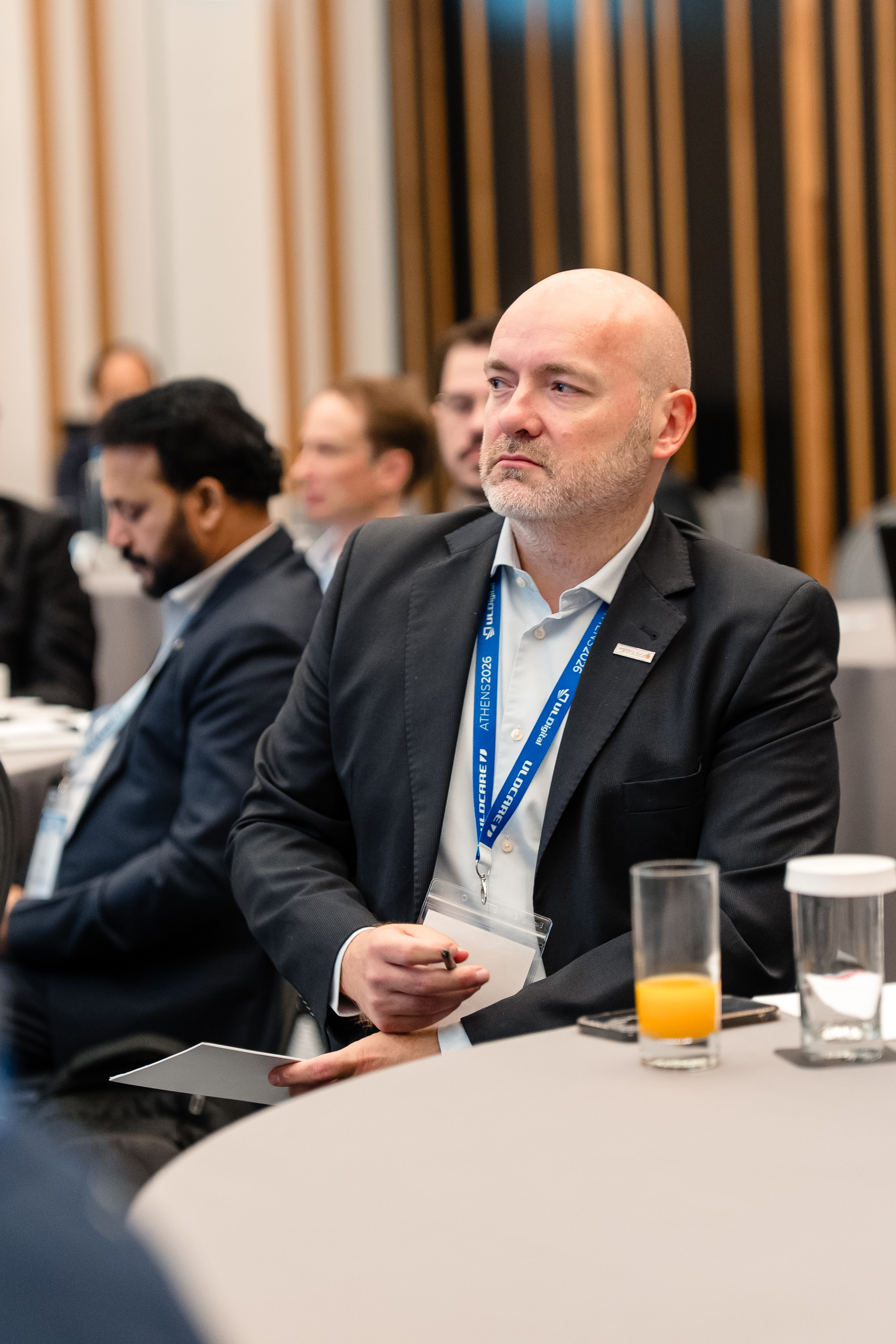
ULD CARE Athens 2026
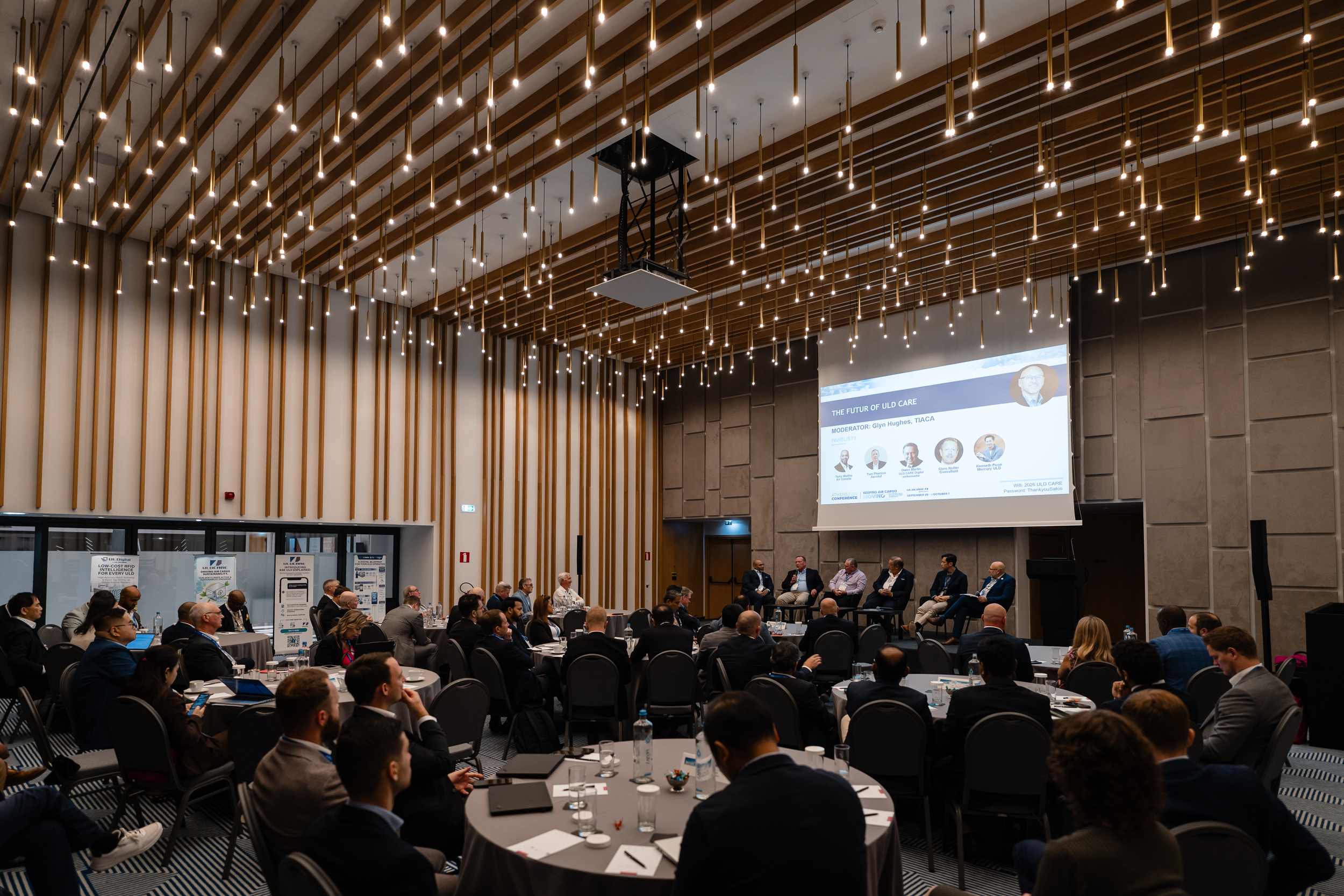
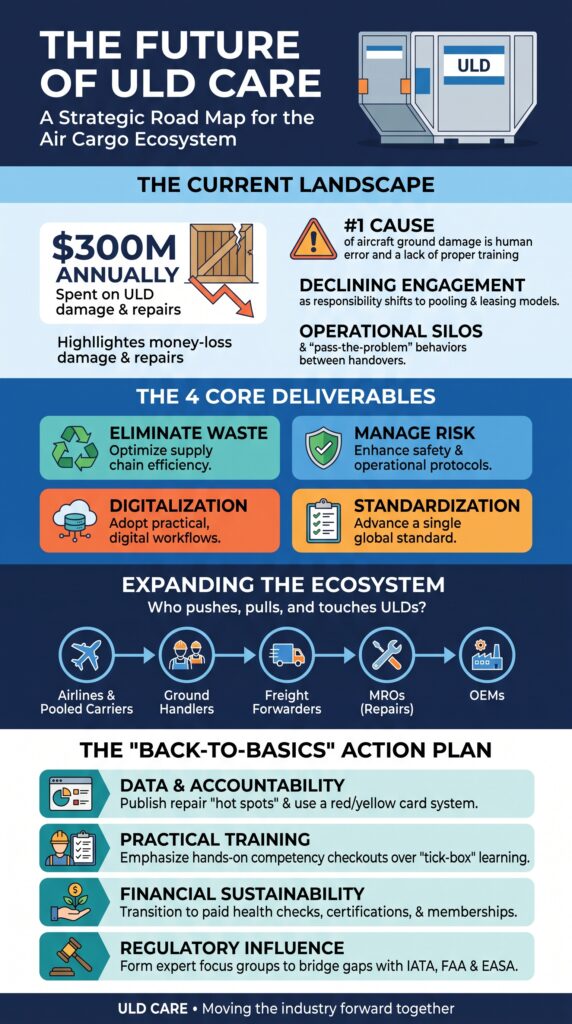
The 2026 ULD CARE Annual Conference in Athens marked a decisive strategic turning point, addressing the $300 million spent annually on ULD damage and repairs. Acknowledging that lagging operational implementation and declining direct airline engagement stem from the industry-wide shift toward pooling and leasing models, the organisation resolved to transition from an airline-centric group into an inclusive, whole-of-industry trade ecosystem uniting all entities that "push, pull, or touch" assets—including ground handling agents, freight forwarders, road feeder services (RFS), maintenance, repair, and overhaul (MRO) stations, and original equipment manufacturers (OEMs).
To ensure long-term viability, ULD CARE revalidated its core deliverables—risk management, waste elimination, digitalisation, and global standardisation—while agreeing to migrate from a purely free-of-charge model toward value-based commercial funding, including subscription tiers, training certifications, and paid operational health checks. This governance restructuring is underpinned by a practical "back-to-basics" frontline agenda, mandating competency-based checkouts over tick-box learning, establishing non-negotiable role expectations, and deploying public repair "hot spot" dashboards to eliminate pass-the-problem behaviours across intermodal handoffs.
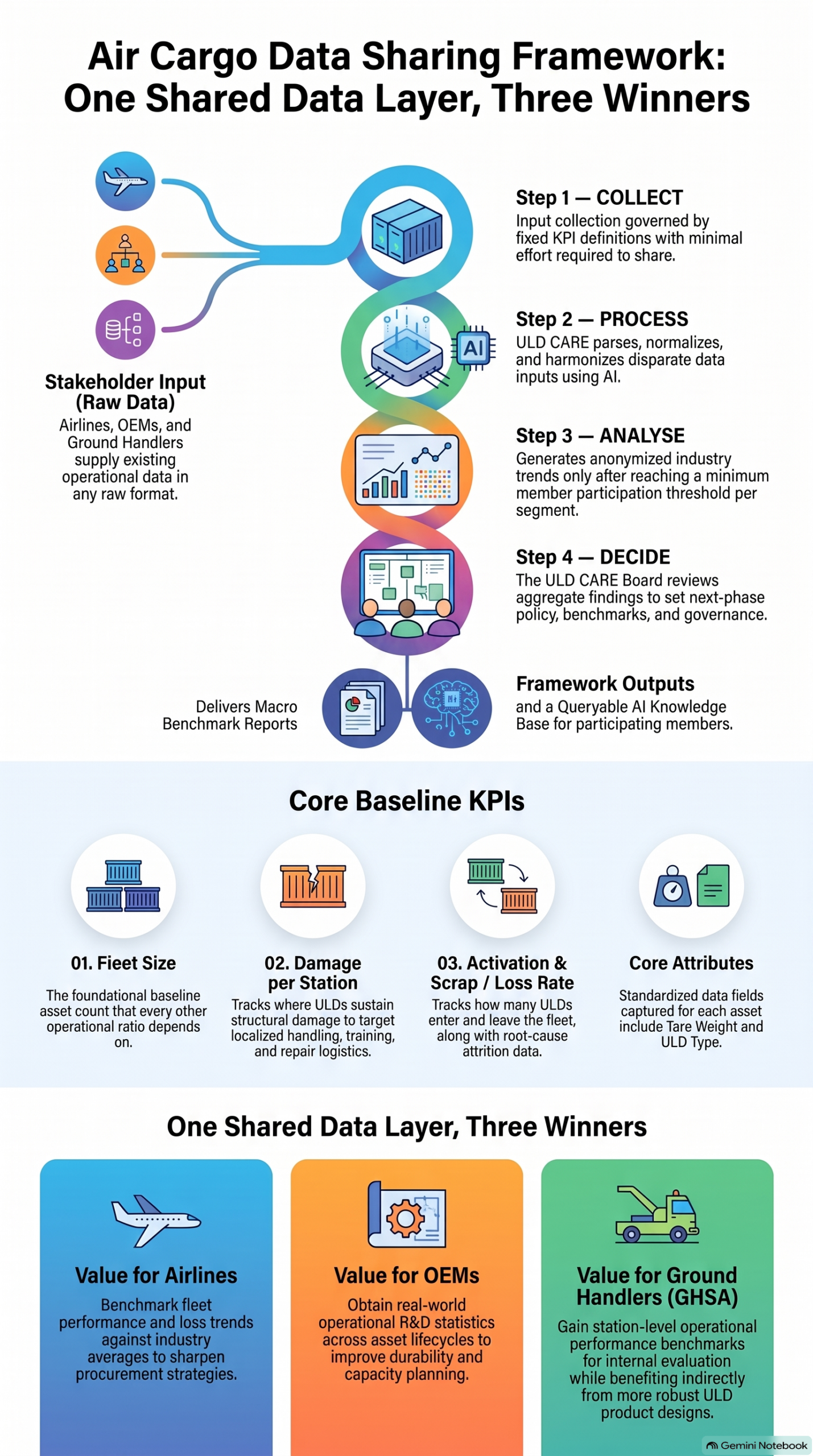
In technology and innovation, the conference set a pragmatic, problem-first roadmap for digitalisation and artificial intelligence, establishing operational safety as the primary "North Star" metric over speculative tech hype. Recognising a critical five-year window to elevate global tracking coverage from the current 30–40% to the 75–80% threshold required for predictive analytics, the community launched the Air Cargo Data Sharing Framework. Serving as a neutral, trusted clearinghouse, ULD CARE will utilise AI to normalise and harmonise member submissions across three baseline minimum viable product (MVP) KPIs—Fleet Size, Damage per Station, and Activation & Scrap/Loss Rate—to deliver anonymised macro benchmarks. In tandem, the ULDigital initiative advanced tangible tools to illuminate off-airport "dark zones" across trucker and forwarder yards, pairing smartphone mobile condition capture (eVerify camera OCR) and open, writeable RFID toe-rail standards with predictive dwell alerting ("Ping & Proof") and native alignment to IATA ONE Record data models.
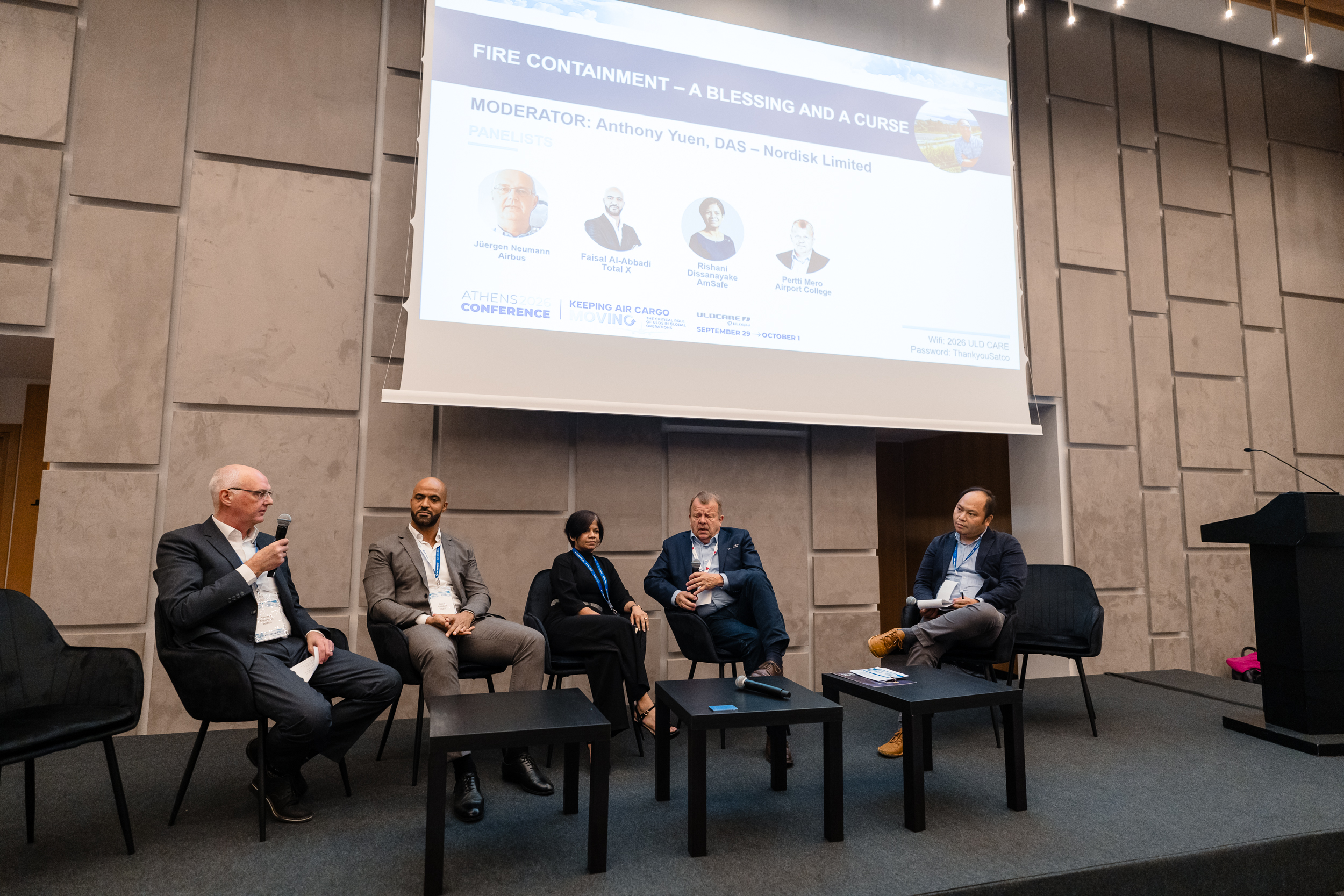
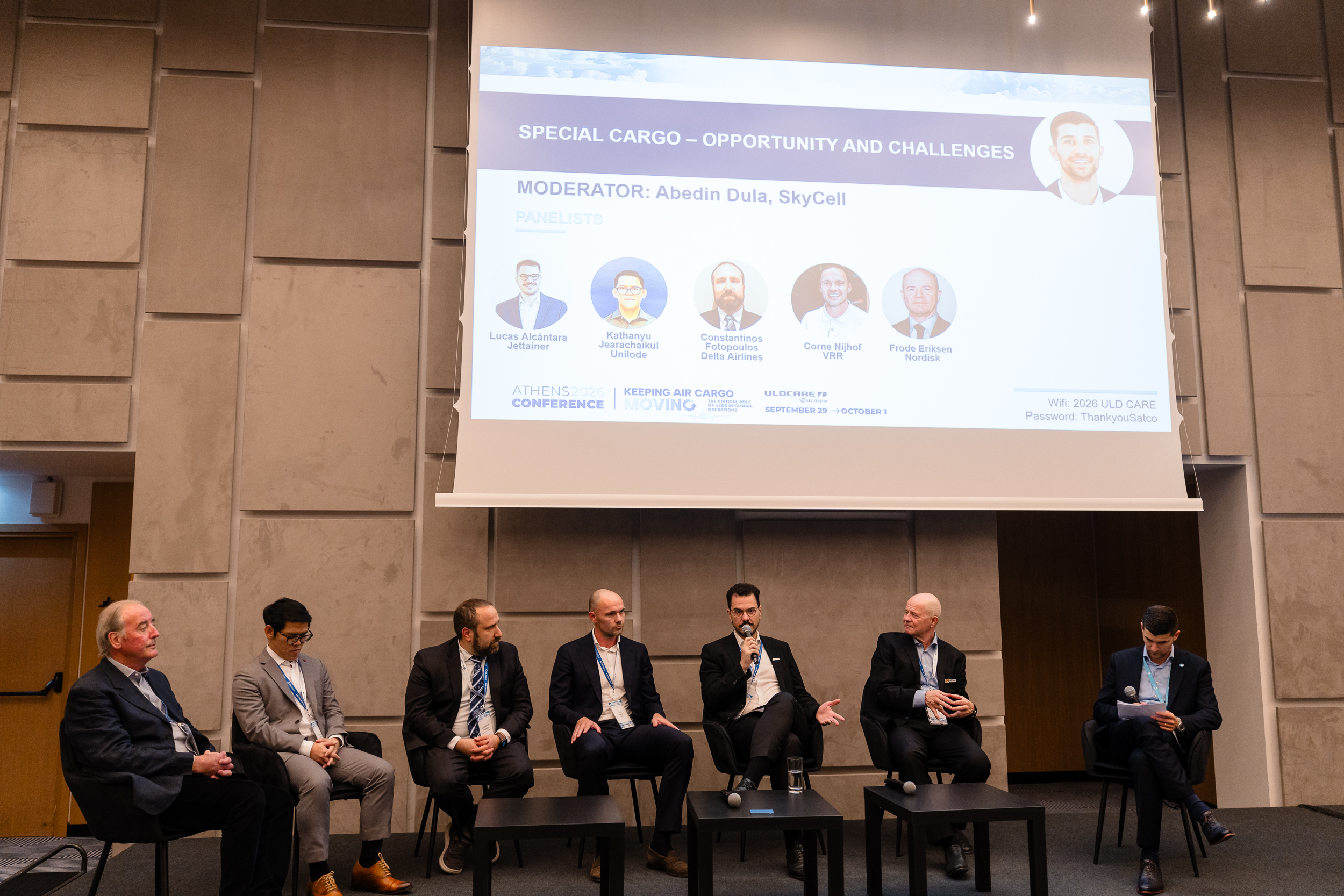
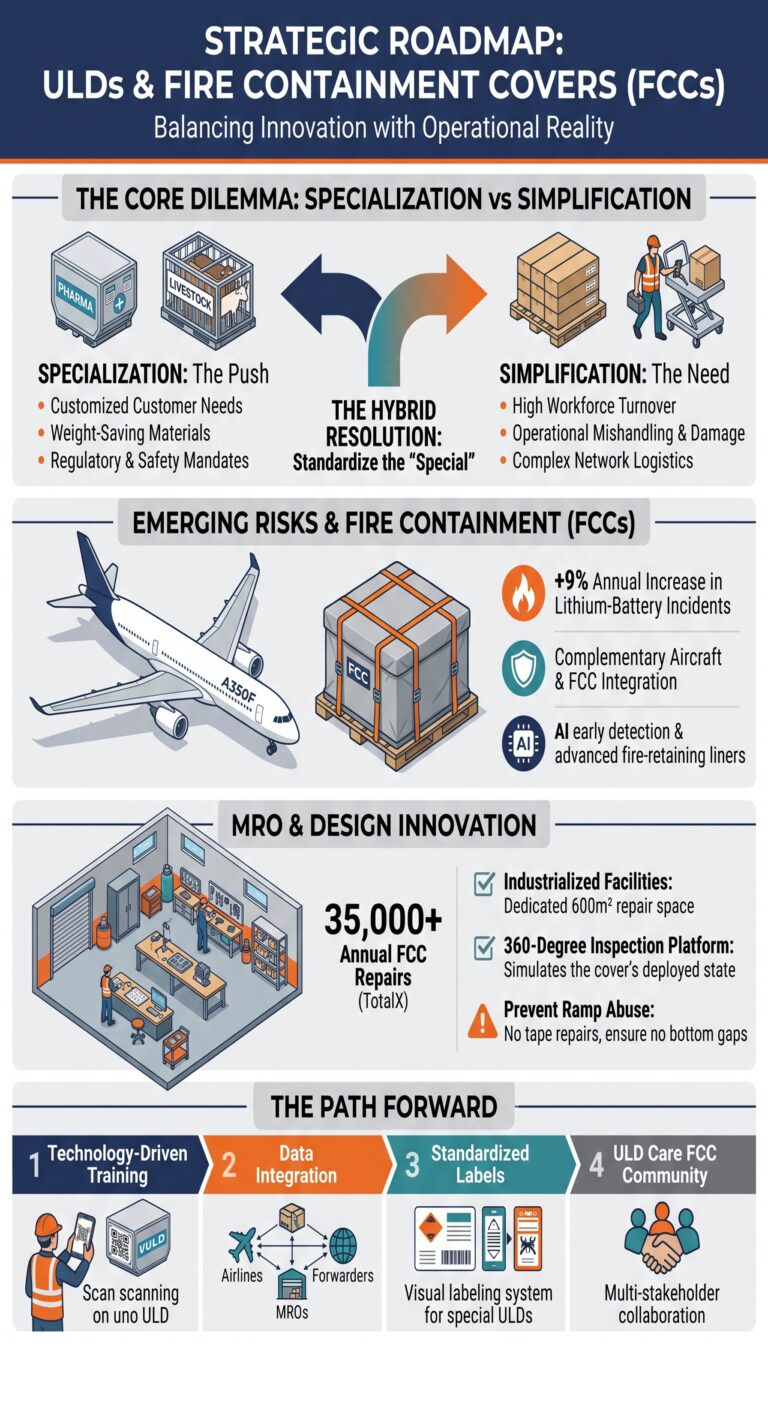
Addressing specialized operations and environmental stewardship, the remaining tracks delivered concrete frameworks for Fire Containment Covers (FCCs), special cargo, and sustainability. To resolve the operational tension between growing market demand for purpose-built containers and frontline ramp complexity, industry leaders endorsed a hybrid model that standardises critical features across common units, particularly to mitigate lithium-battery fire incidents growing at 9% annually along major e-commerce corridors. Discussions addressed operational and maintenance realities by showcasing industrialised MRO repair facilities, 360-degree inspection platforms, and measures to curb destructive ramp practices and transit damage inside trucks.
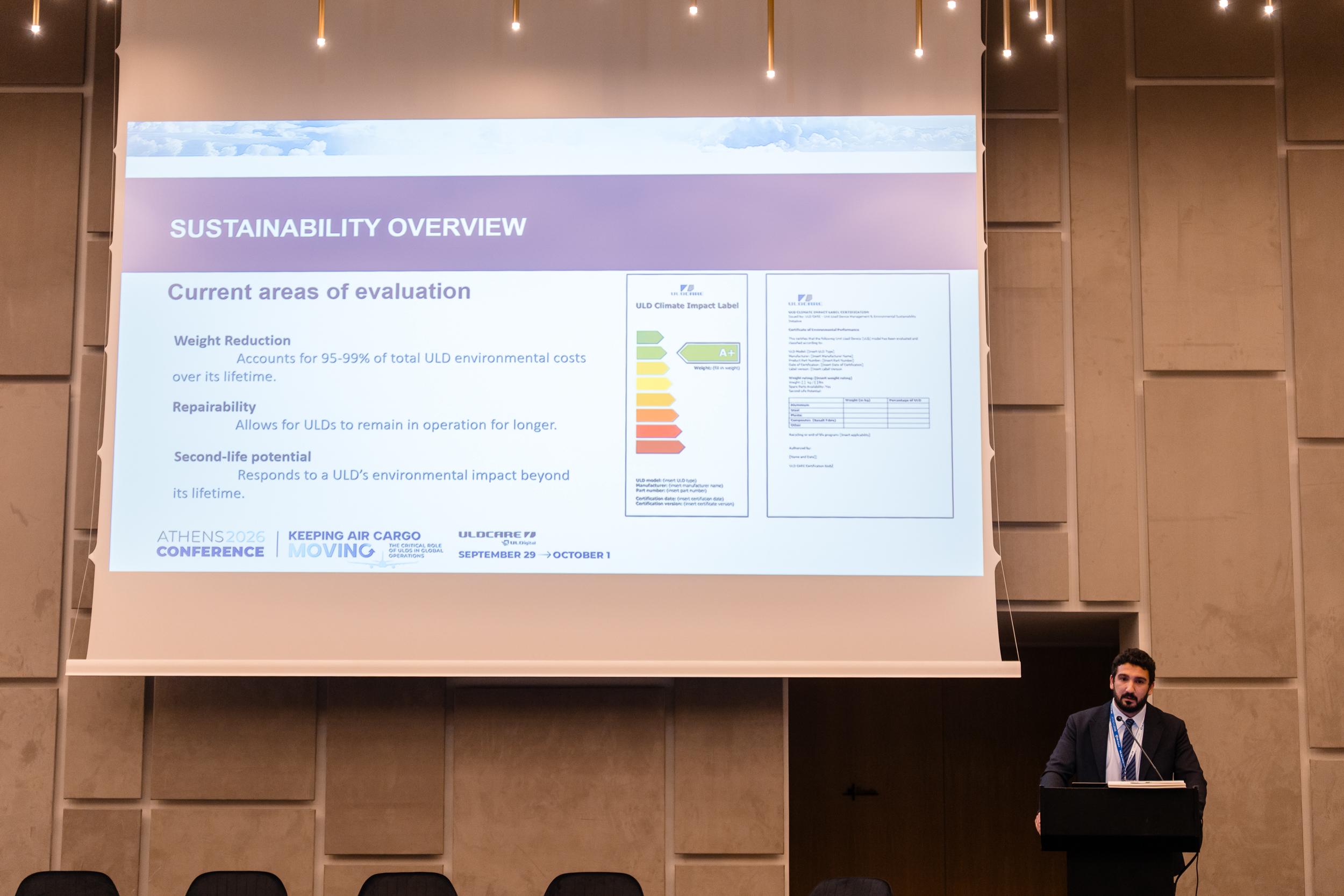
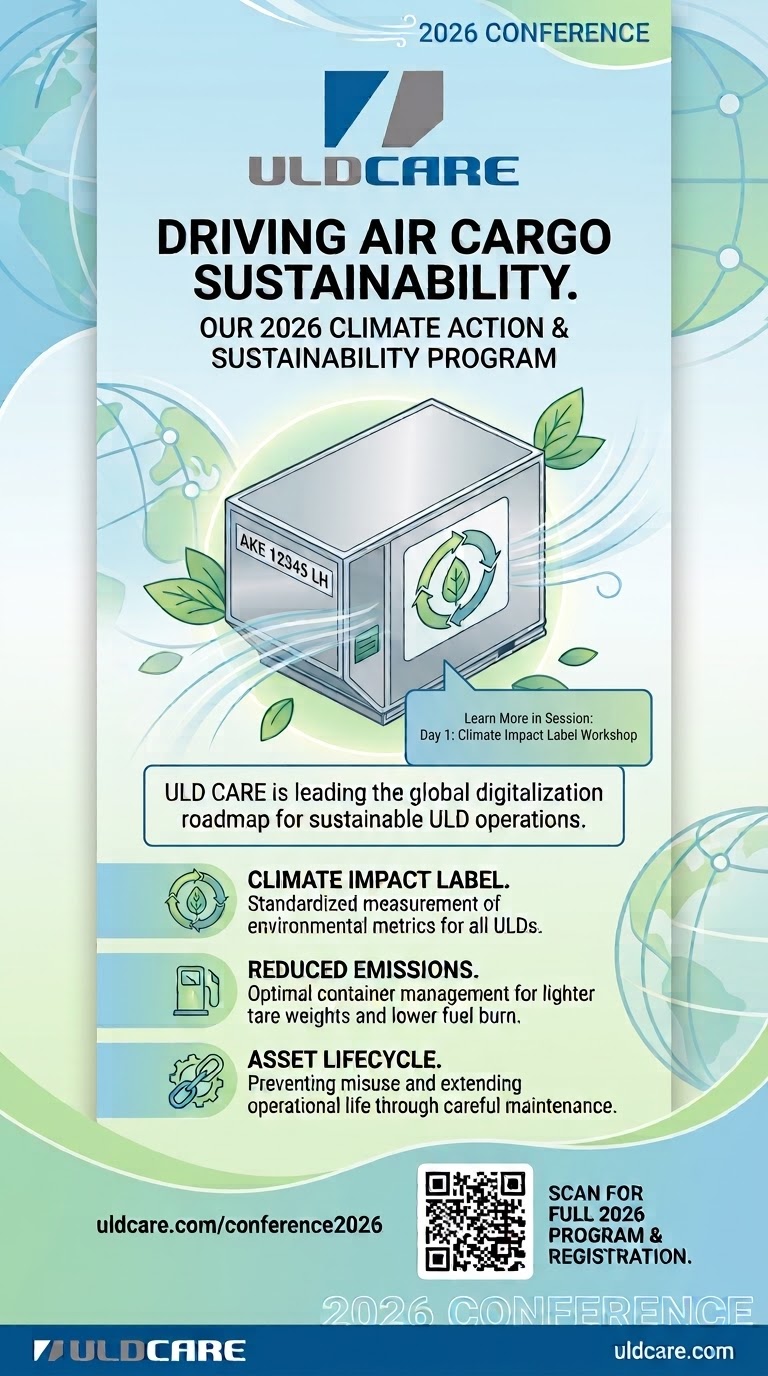
Finally, the sustainability track broadened the ULD Climate Impact Label beyond standard AKE containers to PMCs and pallet nets, reinforcing that tare weight reduction accounts for 95–99% of a ULD’s lifetime environmental impact alongside repairability and second-life potential, concluding with an industry awards ceremony recognising certified equipment across leading manufacturers.
Images from the 2026 Conference